A huge thanks to The Deland Garden Club for having us to your October meeting of 2025

Pollinator partnership – pollinator.org
Florida Friendly Landscape Program FFL landscaping program
Protecting Bees Protectingbees.njaes.rutgers.edu
RachelMallinger.com Rachel Mallinger
Mallinger Scholarly Articles Mallinger Google Scholar
Florida Bees Bees of Florida
Attracting Bees – Attracting Native Bees
Publications – UF Mallinger Publications
Landscape Context – Pollinator connections
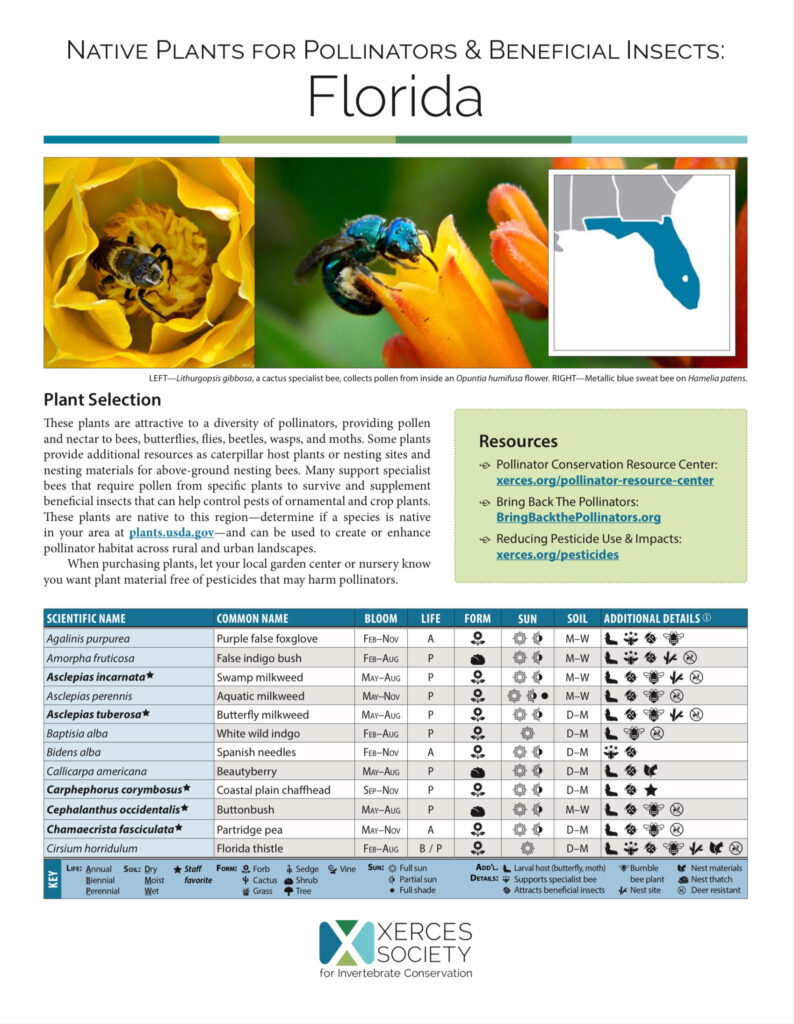
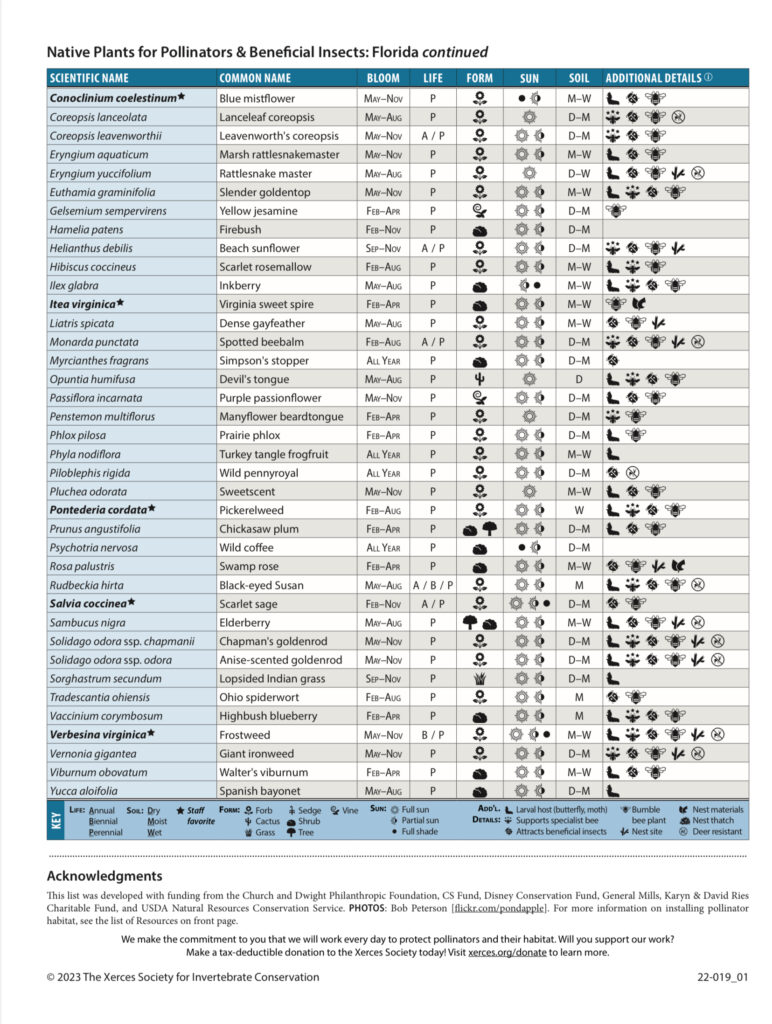
pollinator conservation xerces.org
Oil Collecting Bees gardenecology
USF Library – Lysomer – Oil Collecting Bees target plants
Seed Coatings – www.centerforfoodsafety.org
Why are seed coatings a problem for bees?
Bees are exposed to neonicotinoid residues from seed coatings in numerous ways: from dust during the planting of coated seeds; through pollen and nectar in plants grown from coated seeds; through contaminated surface water (puddles) in or near fields where coated seeds are grown; and in the soil itself (70% of native bees nest in the ground). Although neonic-coated seeds are sometimes planted prior to flowers being in bloom, research shows that only about 5-20% of the active chemical on the seed enters the plant, leaving the remaining 80-95% to enter the environment. There are dozens of peer-reviewed independent studies showing adverse impacts to bees from uses of seed coatings. For example, this study from Purdue University researchers.
But more than just bees are at risk. Neonicotinoids are extremely persistent and mobile. Depending on the soil conditions, neonicotinoid residues can last anywhere from several months to several years in the environment post-application. Neonicotinoids are also highly water soluble, meaning that they can be transported during storm conditions in runoff and through agricultural drainage, impacting both agricultural and aquatic ecosystems – Center for Food Safety
Is it true that the Environmental Protection Agency (EPA) does not regulate the use of seed coatings as a pesticide application? How is this possible?
The EPA has never regulated the actual planting of coated seeds as a pesticide application, despite their use on 150 million acres across the country annually. Approximately 95% of the land area in the United States that has been treated with neonicotinoid insecticides has been treated via planting these neonic-coated seeds. The agency has been exempting this type of pesticide application under the Federal Insecticide, Fungicide, Rodenticide Act’s (FIFRA) treated article exemption. This means that the EPA has allowed extensive use of neonics and widespread environmental contamination to occur without requiring the seeds’ registration under FIFRA, without mandatory and enforceable labels on the seed bags, and without adequate assessments of serious ongoing environmental harm (such as soil and water contamination). As a result, EPA’s actions (and inaction) have caused both acute honey bee kills and chronic effects leading to excess bee colony mortality, excess bird mortality, nationwide water and soil contamination, and other environmental and economic harms. – Center for Food Safety